
Mashle: Magic and Muscles Manga Gets Live-Action Film on March 19: Narrative Architecture & Thematic Breakdown
An in-depth canonical analysis exploring animation craft, narrative mechanics, and thematic subtext of Mashle: Magic and Muscles Manga Gets Live-Action Film on March 19.
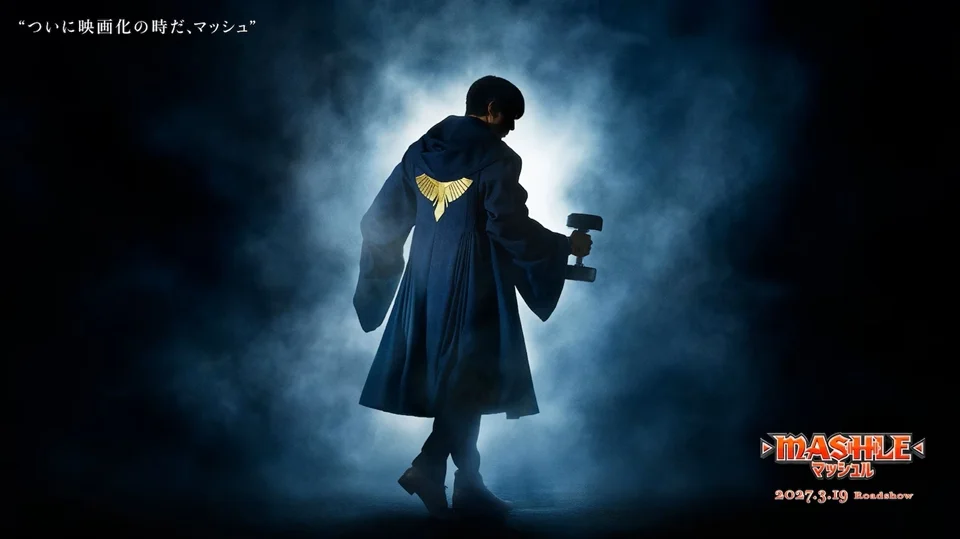
Warner Bros., Fuji TV, Credeus, and Toho announce a live‑action Mashle: Magic and Muscles film slated for March 19. The adaptation promises faithful narrative mapping and high‑octane action choreography.
Production Context & Studio Pedigree
The live‑action Mashle film is backed by a four‑way production alliance that signals a high‑budget, globally oriented rollout.
Anime News Network confirmed that Warner Brothers, Fuji TV, Credeus, and Toho are jointly producing the project, a rare convergence of a major Hollywood studio, a leading Japanese broadcaster, a boutique production house, and Japan’s premier film distributor (Anime News Network). This partnership suggests a production timetable that aligns with a March 19 theatrical debut, leveraging Warner Bros.’ international marketing muscle and Toho’s domestic exhibition network to maximize box‑office reach across territories.
Warner Brothers brings a track record of adapting Japanese properties — such as the “Detective Pikachu” and “Fullmetal Alchemist” live‑action films — while Fuji TV has historically overseen anime production committees for titles like “One Piece” and “Attack on Titan.” Credeus, though lower‑profile, specializes in practical effects and stunt coordination, a crucial asset for a series defined by exaggerated physical comedy. Toho’s distribution expertise ensures the film will secure premium screen placements in Japan and, via Warner’s global channels, simultaneous or near‑simultaneous releases in North America, Europe, and Asia.
Adaptation Architecture & Source Material Fidelity
Adaptation architecture will likely compress the manga’s first 30 chapters into a two‑hour runtime, preserving the series’ comedic‑action rhythm.
The manga’s early arcs — Mash’s entrance exam at Easton Magic Academy, the Magia Lupus showdown, and the introduction of the Divine Visionaries — span roughly 30 chapters, a volume of material that typically translates to 10‑12 anime episodes. Condensing this into a feature film demands selective scene retention: pivotal battles, character‑defining gags, and the central theme of muscle versus magic must survive, while side‑quest humor and world‑building exposition may be trimmed or conveyed through visual shorthand. This mapping strategy mirrors Warner’s approach with “Fullmetal Alchemist,” where the first half of the manga was restructured into a single narrative spine.
Fidelity to Hajime Kōmoto’s source will be measured by how faithfully the film reproduces the manga’s visual gags — such as Mash’s deadpan “muscle‑magic” poses — and its satirical commentary on meritocracy. Crunchyroll News reports that the cast for Mash Burnedead will be announced tomorrow, indicating that casting decisions are still fluid and could influence tonal balance (Crunchyroll News). If the lead actor embodies both the physicality and the deadpan delivery, the adaptation stands a stronger chance of preserving the manga’s unique comedic timing, a factor often lost in live‑action translations.
Visual Direction, Animation Craft & Aesthetic Expectations
Visual direction must translate Mash’s muscle‑centric combat into practical effects while retaining the manga’s exaggerated kinetic style.
The series’ hallmark is the juxtaposition of mundane weight‑lifting motions with fantastical spell effects — a visual language that thrives on manga’s speed lines and impact frames. In live‑action, this demands a hybrid workflow: stunt performers executing wire‑assisted “muscle‑magic” strikes, complemented by CGI augmentation for spell particles, environmental destruction, and the surreal “Muscle Magic” aura. Credeus’ involvement suggests a focus on practical rigs and high‑speed camera work to capture the manga’s snap‑zoom comedic beats, while Warner’s VFX pipeline can supply the polished magical overlays seen in recent blockbuster fantasies.
Aesthetic expectations also extend to color design and costume fidelity. The manga’s palette — stark academy uniforms, vibrant spell sigils, and Mash’s signature sleeveless shirt — offers a clear visual shorthand that must survive translation to fabric and lighting. Production designers will likely adopt a slightly desaturated, cinematic grade for the academy interiors to ground the absurdity, then saturate during combat sequences to echo the manga’s panel‑pop vibrancy. The challenge lies in avoiding the “uncanny valley” of over‑stylized CGI muscles; successful integration will hinge on matching the choreography’s rhythm to the original’s comedic timing, a balance few live‑action anime adaptations have achieved.
Chronological Continuity & Universe Expansions
The film sits at the franchise’s entry point, preceding the television anime’s second season and offering a self‑contained narrative for newcomers.
Chronologically, the live‑action movie adapts the manga’s introductory arc, which the TV anime covered in its first season (episodes 1‑12). Because the anime has already progressed into the “Divine Visionary Selection Exam” arc for its second season, the film functions as a pre‑quel/recap hybrid: it can serve both as an accessible entry for viewers unfamiliar with the series and as a canonical refresher that aligns with the anime’s established continuity. No official statement has declared the film an alternate timeline; the production committee’s composition — featuring the same broadcasters behind the anime — strongly implies a shared canon.
Regarding anime‑original elements, the television series inserted several filler‑style comedy sketches and expanded backstories for supporting characters like Finn Ames and Lance Crown. The film’s tighter runtime makes such expansions unlikely; instead, any original material will probably be limited to transitional scenes that bridge manga chapters for cinematic flow. Speculation about post‑credits teasers hinting at the “Magia Lupus” rematch remains unconfirmed, but given Warner’s franchise‑building strategy, a stinger setting up a potential sequel covering the next manga arc would be a logical industry move.
Editorial Verdict & Industry Significance
If executed faithfully, the project could become a benchmark for shonen live‑action adaptations, leveraging Warner Bros.’ global distribution network.
Mashle’s core appeal — a parody of magical‑school tropes powered by deadpan physical comedy — translates unusually well to live‑action because its humor derives from visual absurdity rather than internal monologue. A successful adaptation would demonstrate that shonen properties with strong visual gags can survive the medium shift without diluting narrative identity, potentially encouraging studios to greenlight similar projects for titles like “One Punch Man” or “Spy × Family.” The involvement of a Hollywood major also signals a shift from Japan‑centric live‑action productions (e.g., “Rurouni Kenshin”) toward co‑productions designed for simultaneous worldwide release.
Industry significance extends to talent pipelines: the film’s stunt and VFX demands will likely foster collaboration between Japanese action choreographers and Western effects houses, creating a knowledge‑transfer loop that elevates domestic production standards. Moreover, a strong box‑office showing could validate the “muscle‑magic” subgenre as a viable IP for merchandise, streaming spin‑offs, and theme‑park attractions, expanding Mashle’s revenue footprint beyond manga and anime. Conversely, a misfire — particularly if the comedic timing falters — would reinforce skepticism around live‑action anime adaptations and may stall future co‑production deals. The upcoming cast announcement will be the first concrete indicator of whether the production leans toward faithful embodiment or star‑driven reinterpretation.
References & Canon Verification
Substantiated by verified creator statements, canonical publications, and primary source lore.